>shitting on the street is aryan boorucuck
  • Welcome. Registering and having your account be approved may take a while since there's only one guy checking and approving accounts and guestposts
  • Boards are being moved around and added. Leave feedback in this thread and let jannies move your threads

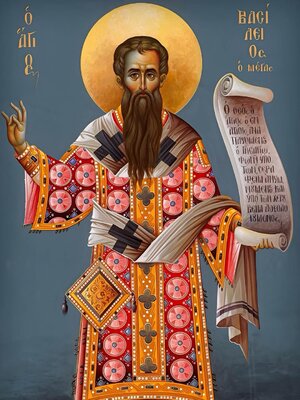
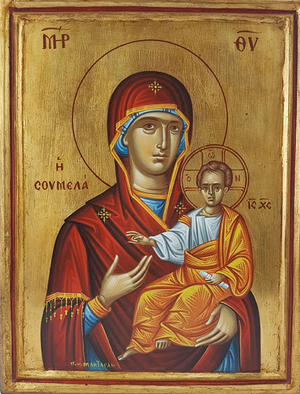
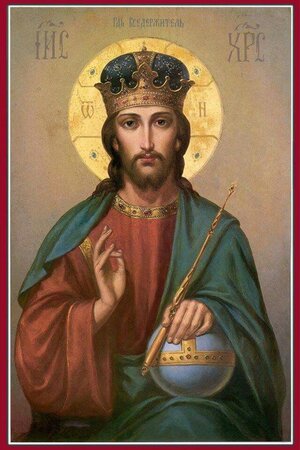
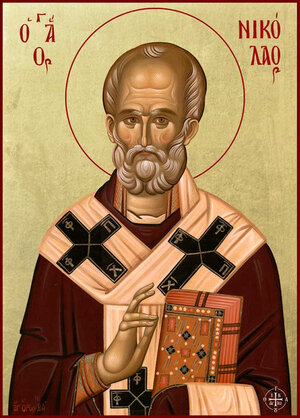
Orthodox icon gallery

first, ftfy

secondly, aztlan and especially chicomoztoc are mentioned throughout different indigenous populations, from mesoamerica all the way up to the southwest. e.g. from the Acolhuas to the Hopi reference this.

aztlan and chicomoztoc are located in oasisamerica
View attachment 100519
notice who also lives in oasisamerica? the Hopi.
View attachment 100520

ur fat, larping, and projecting + define 'mexican'

that's literally you
what
1771524113256.png
 
If the story was so true, you wouldn't be relying on a 2nd century polemical text
When Celsus mentions the story that Jesus’ father was a Roman soldier named Panthera, he explicitly says he is reporting what “the Jews say”
So he's not presenting independent Roman records, he's not claiming firsthand evidence, he's relaying an argument used by Jewish critics of Christianity
Even if Celsus criticizes Judaism elsewhere, he's still presenting a polemical counter-claim used by Jewish opponents of Christiantiy
His work "The True Word" only survives because Origen quoted it and responded to it in his own work "Against Celsus" (248 AD)
This makes the Panthers claim late (2nd century), hostile in origin, and secondhand even in its earliest surviving form
All circumstantial evidence points to it.
Panthera was a Jew from Sidon, only 90km from Sepphoris, Mary's hometown. We know that his cohort was sent to suppress the insurrection at Sepphoris at one point.
Sepphoris was sacked in 4 BC, the same year Jesus was conceived.
 
Panthera was a Jew from Sidon
The only real person we have is the tombstone of Tiberius Julius Abdes Pantera
From his inscription we know that we was from Sidon, he served in the Roman army, he died around the age of 62 and he was buried in Germany. The problem here is that "Panthera" was a really common Roman cognomen, nothing in the inscription says he was Jewish, Sidon was a predominantly Greco-Roman city (not necessarily Jewish), and there's no historical evidence that he was stationed at Galilee or that he had any connections to Mary.
We know that his cohort was sent to suppress the insurrection at Sepphoris at one point.
There's no surviving record that places Tiberius Julius Abdes Pantera at Sepphoris in 4 BC. Although the revolt, which happened after the death of king Herod was suppressed by the Roman governor Publius Quinctilius Varus, we do not have any historical evidence which identifies Pantera’s specific location at that time. At best, we know his unit operated somewhere in the broader Syrian region at some point. That is far from evidence that he personally participated in the sack of Sepphoris, let alone that he even encountered Mary there.
Sepphoris was sacked in 4 BC, the same year Jesus was conceived.
Even the claim that Jesus was born in 4 BC has not been established. Matthew places Jesus' death before the death of king Herod (4 BC), while Luke connects it to the census under Quirinius (6 AD). Meaning that 4 BC is just one possible reconstruction. Even if that date is correct, there's no evidence which supports that Mary was present in Sepphoris during its destruction.

 
The only real person we have is the tombstone of Tiberius Julius Abdes Pantera
From his inscription we know that we was from Sidon, he served in the Roman army, he died around the age of 62 and he was buried in Germany. The problem here is that "Panthera" was a really common Roman cognomen, nothing in the inscription says he was Jewish, Sidon was a predominantly Greco-Roman city (not necessarily Jewish), and there's no historical evidence that he was stationed at Galilee or that he had any connections to Mary.

There's no surviving record that places Tiberius Julius Abdes Pantera at Sepphoris in 4 BC. Although the revolt, which happened after the death of king Herod was suppressed by the Roman governor Publius Quinctilius Varus, we do not have any historical evidence which identifies Pantera’s specific location at that time. At best, we know his unit operated somewhere in the broader Syrian region at some point. That is far from evidence that he personally participated in the sack of Sepphoris, let alone that he even encountered Mary there.

Even the claim that Jesus was born in 4 BC has not been established. Matthew places Jesus' death before the death of king Herod (4 BC), while Luke connects it to the census under Quirinius (6 AD). Meaning that 4 BC is just one possible reconstruction. Even if that date is correct, there's no evidence which supports that Mary was present in Sepphoris during its destruction.

Okay you won the argument
 
thank you, now gtfo
...NOT!
Sepphoris was her family's hometown, so she would have stayed there. It was the capital of Galilee, a regular hub that her family passed through, which would explain Joseph's trade connections.
Where's the historical evidence that Mary wasn't in Sepphoris? If you're going to pull out the historical evidence card, where's the evidence she was even from Nazareth?

All sources I've find stated that Panthera's unit was in Judea around the time. All sources I've found state that Panthera was atleast Semitic of some sort.

>It appears this First Cohort of Archers moved from Palestine to Dalmatia in 6 AD, and to the Rhine in 9 AD. Pantera came from Sidon, on the coast of Phoenicia just west of Galilee, presumably enlisted locally. He served in the army for 40 years until some time in the reign of Tiberius. On discharge he would have been granted citizenship by the Emperor (and been granted freedom if he had formerly been a slave), and added the Emperor’s name to his own. Tiberius ruled from 14 AD to 37 AD. Pantera’s 40 years of service would therefore have started between 27 BC and 4 BC.

>As Pantera would probably have been about 18 when he enlisted, it means he was likely born between 45 BC and 22 BC. He could have been as old as 38 or as young as 15 at the time of Jesus’ conception in the summer of 7 BC.

>In 6 AD when Jesus was 12, Judas of Galilee led a popular uprising that captured Sepphoris, the capital of Galilee. The uprising was crushed by the Romans some four miles north of Nazareth. It is possible (and appealing to lovers of historical irony) that Pantera and Joseph fought on opposite sides. As Joseph is never heard of again he may well have been killed in the battle, or have been among the 2,000 Jewish rebels crucified afterwards.

>So Tiberius Iulius Abdes Pantera is indeed a possibility as Jesus’ father. The only thing we know for certain is that Mary’s husband Joseph wasn’t the father, and that Mary was already pregnant when they married. It could have been rape, or Mary may have been a wild young teen who fell for a handsome man in a uniform, even if he was part of an occupying army. It happens.


Most biblical scholars, even if they don't think Panthera was Jesus's father, think that he was a distant paternal relative of sometime, perhaps Joseph's cousin.
 
Back
Top Bottom