>I didn't do eeee!
  • Welcome. Registering and having your account be approved may take a while since there's only one guy checking and approving accounts and guestposts
  • Boards are being moved around and added. Leave feedback in this thread and let jannies move your threads

Orthodox icon gallery

1000014779.jpg
 
March 30 - The Monk Who Never Judged Anyone

Today, we also commemorate a unique Synaxarion from the Slavic tradition - the unnamed negligent monk who died joyfully, because he had passed his entire life without ever condemning or judging anyone, and forgiving those who wronged him in any way.

In a monastery, there was a certain monk who spent his days not caring about his salvation, but indulging all his life in idleness. Struck by a serious illness in his old age, he neared his final breath, but he was not at all afraid of death, and prepared to be parted from the body with joy, praising and glorifying God. The brothers and abbot said to him:

“We saw that you, brother, spent your life in idleness. Why are you so carefree and joyful at this terrible hour of death? Strengthened by the power of Jesus Christ our God, stand up and explain this to us, so that we too may glorify God.”

The brother, getting out of bed a little, said to them:

“It is true, fathers, that I spent my life carelessly. Just now the Angels of God brought to me and read a manuscript, on which all my evil deeds were recorded. After reading the manuscript, the Angels asked me, ‘Do you remember these deeds of yours?’ I answered: ‘Yes, I remember exactly. But since I renounced the world, and accepted the monastic tonsure, never have I condemned anyone, nor have I been angry with anyone. Therefore I beseech you to do unto me according to the word of Christ, who said: ‘Judge not, that you be not judged’ (Matt. 7:1) and ‘For if you forgive men their trespasses, your heavenly Father will also forgive you’ (Matt. 6:14). And as soon as I said this, immediately the holy Angels tore up the handwritten manuscript of my sins. That is why I go to God with joy.”

Having said this, the monk delivered his soul to the Lord.

This icon depicts “The Crucified Monk” / “The True Life of a Monk”. The unnamed monk silently reposes on the cross, as demons assail him with spears and arrows representing the passions - greed, lust, gluttony, and sloth on the left; envy, pride and wrath on the right. On his chest is written: “Create in me a clean heart, O God, and renew a right spirit within me.”

@cx2

 
March 30 - The Monk Who Never Judged Anyone

Today, we also commemorate a unique Synaxarion from the Slavic tradition - the unnamed negligent monk who died joyfully, because he had passed his entire life without ever condemning or judging anyone, and forgiving those who wronged him in any way.

In a monastery, there was a certain monk who spent his days not caring about his salvation, but indulging all his life in idleness. Struck by a serious illness in his old age, he neared his final breath, but he was not at all afraid of death, and prepared to be parted from the body with joy, praising and glorifying God. The brothers and abbot said to him:

“We saw that you, brother, spent your life in idleness. Why are you so carefree and joyful at this terrible hour of death? Strengthened by the power of Jesus Christ our God, stand up and explain this to us, so that we too may glorify God.”

The brother, getting out of bed a little, said to them:

“It is true, fathers, that I spent my life carelessly. Just now the Angels of God brought to me and read a manuscript, on which all my evil deeds were recorded. After reading the manuscript, the Angels asked me, ‘Do you remember these deeds of yours?’ I answered: ‘Yes, I remember exactly. But since I renounced the world, and accepted the monastic tonsure, never have I condemned anyone, nor have I been angry with anyone. Therefore I beseech you to do unto me according to the word of Christ, who said: ‘Judge not, that you be not judged’ (Matt. 7:1) and ‘For if you forgive men their trespasses, your heavenly Father will also forgive you’ (Matt. 6:14). And as soon as I said this, immediately the holy Angels tore up the handwritten manuscript of my sins. That is why I go to God with joy.”

Having said this, the monk delivered his soul to the Lord.

This icon depicts “The Crucified Monk” / “The True Life of a Monk”. The unnamed monk silently reposes on the cross, as demons assail him with spears and arrows representing the passions - greed, lust, gluttony, and sloth on the left; envy, pride and wrath on the right. On his chest is written: “Create in me a clean heart, O God, and renew a right spirit within me.”

@cx2

interesting
 
1000014852.jpg
March 30 - The Visitation of the Most Holy Theotokos and Saint Elizabeth

Today, we also commemorate the Visitation of the Most Holy Theotokos to Saint Elizabeth. This joyful event, which is recorded in the Gospel of Luke (1:39-45), immediately follows the Annunciation to the Theotokos by the Archangel Gabriel.

Having humbly accepted the announcement of the Archangel Gabriel that she would give birth to the Son of God, the Virgin Mary eagerly went to seek the company of her cousin Elizabeth, who at that time was in her sixth month bearing Saint John the Forerunner in her womb.

When the Theotokos greeted Elizabeth and embraced her, the infant John the Forerunner began to leap for joy in his mother’s womb, for he recognised that he was in the presence of the Lord and Savior.

Filled with the Holy Spirit, Elizabeth proclaimed to the Theotokos: “Blessed are you among women, and blessed is the fruit of your womb! But why is this granted to me, that the mother of my Lord should come to me? For indeed, as soon as the voice of your greeting sounded in my ears, the babe leaped in my womb for joy. Blessed is she who believed, for there will be a fulfillment of those things which were told her from the Lord” (Luke 1:42-45).

The Feast of the Visitation of the Most Holy Theotokos and Saint Elizabeth was established by Archimandrite Antonin Kapustin (1817-1894), head of the Russian Orthodox Mission in Jerusalem. The Feast however has not yet been accepted by all Orthodox jurisdictions.

The Gorneye Convent in Jerusalem (images 7/8), built on the site of the Meeting of the Theotokos and Saint Elizabeth, celebrates this Feast on March 30. Since after the Annunciation (March 25) Mary “went with haste” to visit her cousin Elizabeth, March 30 seems a reasonable date for the feast. However, if March 30 should fall between Lazarus Saturday and Pascha, the Feast is transferred to Bright Friday.
 
1000014853.jpg 1000014855.jpg 1000014857.jpg 1000014854.jpg 1000014856.jpg 1000014858.jpg
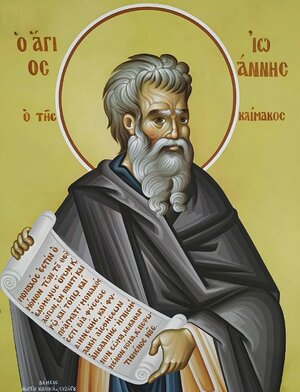
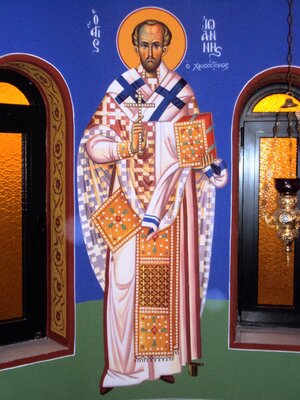
March 30 - Saint John Climacus

Today, we commemorate Saint John Climacus. While the Church also commemorated him on the fourth Sunday of Great Lent, calling the faithful to ascend the thirty ‘rungs’ of virtue outlined in his renowned work “The Ladder of Divine Ascent”, today serves as the feast day of his blessed repose.

Saint John was born in the year 579. At age 16, he offered himself to God and became a novice at the Monastery of Saint Catherine at Mount Sinai, subjecting himself to the spiritual instruction of Abba Martyrius. At 19 years of age, he entered the arena of hesychia at an isolated place called Tholas, about 5 miles from the monastery.

He lived there for 40 years, inflamed with a burning love for God, and laboring in silence, fasting, prayer, and tears of penitence. He ate and slept very little, taking just as much as he needed to maintain extravagant vigilance of the nous.

He was made worthy to receive from God the gift of foresight. When one of his disciples fell asleep underneath a rock, which was about to fall on him and crush him, the Saint received foreknowledge of this through the Holy Spirit while sitting in his cell, and appeared in the dream of his disciple, waking him from sleep, and warning him to leave that place before the rock fell.

Concealing his ascetic deeds from others, Saint John often withdrew to a cave, but reports of his holiness spread, and visitors from all walks of life came to see him, desiring to hear his edifying words of salvation. Gifted with discernment, he lovingly received all who came to him.

One day, some envious monks reproached him for being too talkative, and so St John kept silence for a whole year. The monks realized their error, and they went to the ascetic and begged him not to deprive them of the spiritual profit of his conversation.

Having attained the pinnacle of virtue, and becoming Abbot of the Monastery at Mount Sinai, St John Climacus delivered his soul to the Lord. Before his death, he wrote the all-wise book of the thirty divine rungs to ascend in the spiritual life, called the “Ladder”. For this reason, he became known as John “Climacus” meaning “of the ladder”.
 
Back
Top Bottom